Division of bedrock geology and collections
Nimetus
Bedrock geology and collections division (2023-2025)
Bedrock geology research group (2020-2022)
Head of the research group
Related department
TalTech priority area
Overview
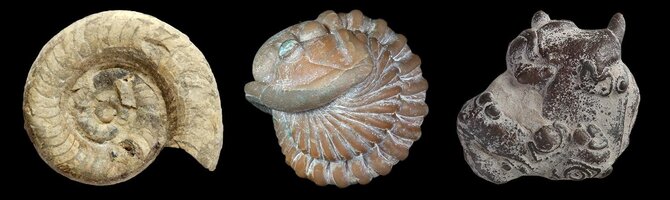
The research group of bedrock geology holds competences on regional geology, sedimentary rocks, stratigraphy and paleontology of Estonia and beyond.Such expertise is needed in applied geosciences, but the main work of the group is aiming at better understanding of the interactions between geo- andbiosphere processes in deep time. The group holds leading paleontological competence in Estonia, and for some fossil groups, leading expertise worldwide(notably for conodonts, chitinozoans and scolecodonts). The group's main research directions are: • Paleoenvironment and paleoclimate reconstructions using multiple proxy indicators such as carbon and oxygen isotopes, sedimentology etc. • Paleobiodiversity dynamics including mass extinction and their links with climate and environmental changes. • Paleobiology and evolution of various groups of organisms during the Paleozoic. • High-resolution bio- and chemostratigraphy that provides regional spatio-temporal framework and global time correlations.The group is using the large geological collections at the department that constitute a globally unique archive of deep time Earth environments, climate and biodiversity. The group is responsible for the development and opening up this archive for researchers worldwide as part of national and pan-Europeanresearch infrastructure.
Research group member
Kõrvits, Sonja
Gotsenko, Arina
Jõgisalu, Trinity
Doctoral students
Endised liikmed
Research classification (Frascati)
Keyword
bedrock
geology of Estonia
sedimentary rocks
Paleozoic
paleontology
paleoenvironment
paleoclimate
stratigraphy
sedimentology
Baltoscandia
Baltica
Ordovician
Silurian
paleobiodiversity
mass extinction
ice age
microfossils
fossils
geological collections
geological databases
e-services
Related projects
Important results
In 2025, the research group’s activities focused on identifying paleoclimate and environmental changes during the Palaeozoic, assessing the reliability of geochemical and other indicators, regional stratigraphy, and elucidating patterns of biodiversity and paleoecology in the geological past. Significant results comparing paleoclimate trends between the Baltica and Siberian continents were published, based on oxygen isotope studies of Ordovician conodonts. Several fossil taxa, notably among stromatoporoids and trace fossils, were first described or identified in the Baltic region, thereby extending knowledge of evolutionary and biodiversity trends in Palaeozoic faunas. The revision of Cambrian shelly fossils and trace fossils revealed the first record of cloudinids and a possible priapulid in the Cambrian of Estonia. An updated version of the regional stratigraphy of the Silurian System was compiled and published.
- Ausich, W.I., Wilson, M.A., Toom, U. Early Silurian recovery of Baltica crinoids following the end-Ordovician extinctions (Llandovery, Estonia) // Journal of paleontology (2020) vol. 94, 3, p. 521-530 : ill.
https://doi.org/10.1017/jpa.2019.89 - Liang, Y., Hints, O., Tang, P., Nõlvak, J. et al. Fossilized reproductive modes reveal a protistan affinity of Chitinozoa // Geology (2020) vol. 48, 12, p. 1200-1204.
https://doi.org/10.1130/G47865.1 - Yan, G., Lehnert, O., Männik, P., Calner, M., Luan, X., Gong, F., Li, L., Wei, X., Wang, G., Zhan, R., Wua, R. The record of early Silurian climate changes from South China and Baltica based on integrated conodont biostratigraphy and isotope chemostratigraphy // Palaeogeography, palaeoclimatology, palaeoecology (2022) vol. 606, art. 111245, 16 p. : ill.
https://doi.org/10.1016/j.palaeo.2022.111245 - Nõlvak, J., Liang, Y., Hints, O. Early and early Middle Ordovician chitinozoans from the Baldone drill core, central Latvia // Estonian journal of earth sciences (2022) vol. 71, 1, p. 25-43 : ill.
https://doi.org/10.3176/earth.2022.03 - Liang, Y., Nõlvak, J., Xu, H., Chen, Y., Hints, O. Revision of Ordovician chitinozoan Lagenochitina esthonica sensu lato : morphometrics, biostratigraphy and paleobiogeography // Journal of paleontology (2022) vol. 96, 1, p. 46-60.
https://doi.org/10.1017/jpa.2021.79 - Hagen-Peter, G., Wang, Y., Hints, O., Prave, A. R., Lepland, A. Late diagenetic evolution of Ordovician limestones in the Baltoscandian basin revealed through trace-element mapping and in situ U–Pb dating of calcite // Chemical geology (2021) vol. 585, art. 120563.
https://doi.org/10.1016/j.chemgeo.2021.120563 - Männik, P., Lehnert, O., Nõlvak, J., Joachimski, M. M. Climate changes in the pre-Hirnantian late Ordovician based on δ18Ophos studies from Estonia // Palaeogeography, palaeoclimatology, palaeoecology (2021) vol. 569, p. 110347, 16 p. : ill.
https://doi.org/10.1016/j.palaeo.2021.110347 - Richardson, J. A., Lepland, A., Hints, O., Prave, A. R., Gilhooly III, W. P., Bradley, A. S., Fike, D. A. Effects of early marine diagenesis and site-specific depositional controls on carbonate-associated sulfate: Insights from paired S and O isotopic analyses // Chemical geology (2021) vol. 584, art. 120525.
https://doi.org/10.1016/j.chemgeo.2021.120525 - Sorci, A., Cirilli, S., Clayton, G., Corrado, S., Hints, O., Goodhue, R., Schito, A., Spina, A. Palynomorph optical analyses for thermal maturity assessment of upper ordovician (Katian-Hirnantian) rocks from Southern Estonia // Marine and Petroleum Geology (2020) Vol. 120, art. 104574.
https://doi.org/10.1016/j.marpetgeo.2020.104574 - Mänd, K., Lalonde, S.V., Robbins, L.J., Paiste, P., Lepland, A. et al. Palaeoproterozoic oxygenated oceans following the Lomagundi–Jatuli Event // Nature geoscience (2020) vol. 13, 4, p. 302-306.
https://doi.org/10.1038/s41561-020-0558-5 - Young, S.A., Benayoun, E., Kozik, N.P., Hints, O., Martma, T., Bergström, S.M., Owens, J.D. Marine redox variability from Baltica during extinction events in the latest Ordovician–early Silurian // Palaeogeography, Palaeoclimatology, Palaeoecology (2020) vol. 554, art. 109792.
https://doi.org/10.1016/j.palaeo.2020.109792 - Chen, D., Blom, H., Sanchez, S., Märss, T. et al. The developmental relationship between teeth and dermal odontodes in the most primitive bony fish Lophosteus // eLife (2020) vol. 9, art. e60985, 20 p. : ill.
https://doi.org/10.7554/eLife.60985.sa2 - Fryda, J., Lehnert, O., Joachimski, M. M., Männik, P., Kubajko, M., Mergl, M., Farkaš, J., Frydova. B. The Mid-Ludfordian (late Silurian) Glaciation : a link with global changes in ocean chemistry and ecosystem overturns // Earth-Science Reviews (2021) vol. 220, art. 103652.
https://doi.org/10.1016/j.earscirev.2021.103652 - Kipp, M.A., Lepland, A., Buick, R. Redox fluctuations, trace metal enrichment and phosphogenesis in the ~2.0 Ga Zaonega Formation // Precambrian Research (2020) Vol. 343, Art. 105716.
https://doi.org/10.1016/j.precamres.2020.105716 - Schier, K., Himmler, T., Lepland, A., Kraemer, D., Schoenenberger, J., Bau, M. Insights into the REY inventory of seep carbonates from the Northern Norwegian margin using geochemical screening // Chemical geology (2021) vol. 559, art. 119857, 15 p. : ill.
https://doi.org/10.1016/j.chemgeo.2020.119857 - Kreitsmann, T., Lepland, A., Bau, M., Martma, T. et al. Oxygenated conditions in the aftermath of the Lomagundi-Jatuli Event: The carbon isotope and rare earth element signatures of the Paleoproterozoic Zaonega Formation, Russia // Precambrian research (2020) vol. 347, art. 105855, 16 p. : ill.
https://doi.org/10.1016/j.precamres.2020.105855 - Vinn, O., Ernst, A., Wilson, M.A., Toom, U. Symbiosis of cornulitids with the cystoporate bryozoan Fistulipora in the Pridoli of Saaremaa, Estonia // Lethaia (2021) vol. 54, p. 90-95 : ill.
https://doi.org/10.1111/let.12385 - Liang, Y., Wang, G., Servais, T., Nõlvak, J. Hints, O. et al. Age constraints of the Hungshihyen Formation (Early to Middle Ordovician) on the western margin of the Yangtze Platform, South China : new insights from chitinozoans // Palaeoworld (2020) vol. 29, 1, p. 66-74 : ill.
https://doi.org/10.1016/j.palwor.2019.05.008 - Vinn, O., Ernst, A., Wilson, M.A., Toom, U. Symbiosis of rugose corals with the cystoporate bryozoan fistulipora przhidolensis in the pridoli (Latest Silurian) of Saaremaa, Estonia // Palaios (2020) Vol. 35, Issue 6, p. 237 - 244.
https://doi.org/10.2110/PALO.2020.019 - Toom, U., Vinn, O., Isakar, M., Madison, A., Hints, O. Small faecal pellets in Ordovician shelly fossils from Estonia, Baltoscandia // Estonian journal of earth sciences (2020) vol. 69, 1, p. 1-19 : ill.
https://doi.org/10.3176/earth.2020.01 - Bowman, C. N., Them II, T. R., Knight, M. D., Kaljo, D., Eriksson, M. E., Hints, O., Martma, T., Owens, J. D., Young, S. A. A multi-proxy approach to constrain reducing conditions in the Baltic Basin during the late Silurian Lau carbon isotope excursion // Palaeogeography, palaeoclimatology, palaeoecology (2021) vol. 581, art. 110624.
https://doi.org/10.1016/j.palaeo.2021.110624 - Vinn, O., Ernst, A., Wilson, M. A., Toom, U. Intergrowth of bryozoans with other invertebrates in the Late Pridoli of Saaremaa, Estonia // Annales societatis geologorum Poloniae (2021) vol. 91, 2, p. 101-111.
https://doi.org/10.14241/asgp.2021.04 - Jarochowska, E., Bremer, O., Yiu, A., Märss, T., Blom, H., Mörs, T., Vajda, V. Revision of thelodonts, acanthodians, conodonts, and the depositional environments in the Burgen outlier (Ludlow, Silurian) of Gotland, Sweden // GFF (2021) vol. 143, 2-3, p. 168-189 : ill.
https://doi.org/10.1080/11035897.2021.1907441 - Balthasar, U., Jin, J., Hints, L., Cusack, M. Brachiopod shell thickness links environment and evolution // Palaeontology (2020) vol. 63, 1, p. 171-183 : ill.
https://doi.org/10.1111/pala.12450 - Amon, L., Blaus, A., Alliksaar, T., Heinsalu, A., Lapshina, E., Liiv, M., Reitalu, T., Vassiljev, J., Veski, S. Postglacial flooding and vegetation history on the Ob River terrace, central Western Siberia based on the palaeoecological record from Lake Svetlenkoye // The Holocene (2020) vol. 30, 5, p. 618–631.
https://doi.org/10.1177/0959683619895582 - Chen, Z-Y., Männik, P., Wang, C-Y. et al. Silurian conodont biostratigraphy of the Laojianshan section, Baoshan, Yunnan Province, SW China // Geological journal (2020) vol. 55, 9, p. 6427−6441.
https://doi.org/10.1002/gj.3813 - Vinn, O., Ernst, A., Wilson, M.A., Toom, U. Symbiosis in trepostome bryozoans from the Sandbian (Late Ordovician) of Estonia // Historical Biology : An International Journal of Paleobiology (2022) vol. 34, 6, p. 1029-1038 : ill., map.
https://doi.org/10.1080/08912963.2021.1959579 - Vinn, O., Holmer, L. E., Wilson, M. A., Isakar, M., Toom, U. Possible drill holes and pseudoborings in obolid shells from the Cambrian/Ordovician boundary beds of Estonia and the uppermost Cambrian of NW Russia // Historical Biology : An International Journal of Paleobiology (2021) vol. 33, 12, p. 3579-3584.
https://doi.org/10.1080/08912963.2021.1878355 - Bremer, O., Jarochowska, E., Märss, T. Vertebrate remains and conodonts in the upper Silurian Hamra and Sundre formations of Gotland, Sweden // GFF (2020) vol. 142, 1, p. 52-80 : ill.
https://doi.org/10.1080/11035897.2019.1655790 - Hints, R., Pajusaar, S., Urtson, K., Liiv, M., Kallaste, T. Metal enrichment in lithologically complex black shales : a case study from the Tremadocian of NE Estonia // Estonian journal of earth sciences (2021) vol. 70, 1, p. 36–50 : ill.
https://doi.org/10.3176/earth.2021.04 https://kirj.ee/wp-content/plugins/kirj/pub/earth-1-2021-36-50_20210128130612.pdf - Penny, A. M., Hints, O., Kröger, B. Carbonate shelf development and early Paleozoic benthic diversity in Baltica : a hierarchical diversity partitioning approach using brachiopod data // Paleobiology (2022) vol. 48, 1, p. 44-64.
https://doi.org/10.1017/pab.2021.3 - Bremer, O., Qu, Q., Sanchez, S., Märss, T., Fernandez, V., Blom, H. The emergence of a complex pore-canal system in the dermal skeleton of Tremataspis (Osteostraci) // Journal of Morphology (2021) vol. 282, 2, p. 1141-1157.
https://doi.org/10.1002/jmor.21359 - Chen, Z., Männik, P., Fan, J. et al. Age of the silurian lower red beds in South China : stratigraphical evidence from the sanbaiti section // Journal of earth science (2021) vol. 32, 3, p. 524–533 : ill.
https://doi.org/10.1007/s12583-020-1350-6 - Jeon, J., Vinn, O., Liang, K., Zapalski, M.K., Toom, U., Kershaw, S. Stromatoporoid-coral/tubeworm intergrowths in the lowermost Silurian Varbola Formation of Estonia: first evidence of competitive interaction // Lethaia (2022) vol. 54, 2, p. 1-13 : ill.
https://doi.org/10.18261/let.55.2.4 - Vinn, O., Ernst, A., Wilson, M.A., Toom, U. Borings and bioclaustrations in bryozoans from the Kunda Regional Stage (Darriwilian; Middle Ordovician) of northern Estonia and NW Russia // Neues Jahrbuch für Geologie und Paläontologie - Abhandlungen (2022) vol. 303, 2, p. 219-225 : map.
https://doi.org/10.1127/njgpa/2022/1044 - Vinn, O., Wilson, M.A., Holmer, L.E., Ernst, A., Tinn, O., Toom, U. Diverse endobiotic symbiont fauna from the late Katian(Late Ordovician) of Estonia // Palaeontologia Electronica (2022) vol. 25, 3, art. a31, 13 p. : ill.
https://doi.org/10.26879/1232 - Wudarska, A., Słaby, E., Wiedenbeck, M., Birski, Ł., Wirth, R., Götze, J., Lepland, A., Kusebauch, C., Kocjan, I. Chlorine isotope composition of apatite from the >3.7 Ga isua supracrustal belt, SW Greenland // Minerals (2020) Vol. 10, Issue 1, Art. 27.
https://doi.org/10.3390/min10010027 - Zatoń, M., Vinn, O., Toom, U., Słowiński, J. New encrusting tentaculitoids from the Silurian of Estonia and taxonomic status of Anticalyptraea Quenstedt, 1867 // GFF (2022) vol. 144, 2, p. 111-117 : ill., map.
https://doi.org/10.1080/11035897.2022.2042378 - Vinn, O., Wilson, M. A., Isakar, M., Toom, U. Symbiotic worms in the inner aragonitic layer of Leptodesma (Bivalvia) from the Přídolí (Upper Silurian) of Saaremaa Island, Estonia // PalZ (2021) vol. 95, 2, p. 231–236.
https://doi.org/10.1007/s12542-021-00554-x - Chen, Z.-Y., Männik, P., Wang, X. et al. First documentation of Llandovery (Silurian) conodont genus Astropentagnathus in China (Langao, Shaanxi Province) and the age of Baiyaya Formation // Palaeoworld (2020) vol. 29, 4, p. 662-671.
https://doi.org/10.1016/j.palwor.2019.11.002 - Paiste, T., Männik, P., Nõlvak, J., Meidla, T. The lower boundary of the Haljala Regional Stage (Sandbian, Upper Ordovician) in Estonia // Estonian journal of earth sciences (2020) vol. 69, 2, p. 76–90 : ill.
https://doi.org/10.3176/earth.2020.05 - Makled, W.A., Hints, O., Hosny, A.M. et al. Exotic Devonian palynomorphs from the Sifa-1X well in the Western Desert, Egypt // Palynology (2021) vol. 45, 2, p. 363-380 : ill.
https://doi.org/10.1080/01916122.2020.1829726 - Vinn, O., Toom, U. New cornulitid from the Ohesaare Formation (late Přidoli) of Saaremaa, Estonia // Neues Jahrbuch für Geologie und Paläontologie - Abhandlungen (2020) vol. 298, 1, p. 67-73.
https://doi.org/10.1127/njgpa/2020/0934 - Hints, L., Pärnaste, H., Männik, P., Reich, M., Rozhnov, S. Development of faunal diversity during the late Llandovery-early Wenlockin the easternmost part of the Baltic Palaeobasin - implications for the Ireviken Event // Estonian journal of earth sciences (2022) vol. 71, 2, p. 89-110 : ill.
https://doi.org/10.3176/earth.2022.07 - Wang, W., Liang, Y., Lyu, Q., Hints, O., Nõlvak, J. et al. Chitinozoans with “skirt”: Ultrastructure and palaeoecological implications of carina in Cyathochitina Eisenack, 1955 // Palaeogeography, palaeoclimatology, palaeoecology (2021) vol. 570, art. 110348, 16 p.: ill.
https://doi.org/10.1016/j.palaeo.2021.110348 - Zapalski, M. K., Vinn, O., Toom, U., Ernst, A., Wilson, M. A. Bryozoan-cnidarian mutualism triggered a new strategy for greater resource exploitation as early as the Late Silurian // Scientific reports (2022) vol. 12, 1, art. 15556 ; 9 p. : ill.
https://doi.org/10.1038/s41598-022-19955-2 - Vinn, O., Wislon, M.A., Isakar, M., Toom, U. New bioclaustration of a symbiont in the mantle cavity of Clitambonites schmidti (Brachiopoda) from the Sandbian (Upper Ordovician) of Estonia // Palaios (2022) vol. 37, 9, p. 520−524.
https://doi.org/10.2110/palo.2021.067 - Chen, Z.-Y., Männik, P., Tang, P. et al. Age of the Silurian Wuxiahe Formation in Langao, Northwest China : New conodont data // Palaeoworld (2021) vol. 30, 4, p. 649-658 : ill.
https://doi.org/10.1016/j.palwor.2020.12.004 - Burrow, C. J., Märss, T. Neotypes for some upper Silurian acanthodian taxa from the Baltic Sea Region and the Welsh Borderland // Estonian journal of earth sciences (2022) vol. 71, 1, p. 17-24.
https://doi.org/10.3176/earth.2022.02 - Paiste, T., Männik, P., Meidla, T. Sandbian (Late Ordovician) conodonts in Estonia : distribution and biostratigraphy // GFF (2022) vol. 144, 1, p. 9-23 : ill.
https://doi.org/10.1080/11035897.2021.2020333 - Paul, C. P. C., Toom, U. The diploporite blastozoan Glyptosphaerites (Echinodermata: Blastozoa) and the origin of diplopores // Estonian journal of earth sciences (2021) vol. 70, 4, p. 224-239 : ill.
https://doi.org/10.3176/earth.2021.15 - Hints, O., Nõlvak, J., Ling, Y. Possible metazoan egg fossils from the Darriwilian (Middle Ordovician) of Baltoscandia // Estonian journal of earth sciences (2021) vol. 70, 4, p. 240-252 : ill.
https://doi.org/10.3176/earth.2021.16 - Vinn, O., Wilson, M.A., Madison, A., Toom, U. Small cornulitids from the Upper Ordovician (Katian) of Estonia // Palaeoworld (2024) vol. 33, 1, p. 57-64 : ill.
https://doi.org/10.1016/j.palwor.2022.12.005 - Vinn, O., Wilson, M.A., Madison, A., Kazantseva, E., Toom, U. First symbiotic association between hederelloids and rugose corals (latest Silurian of Saaremaa, Estonia) // Palaios (2022) vol. 37, 3, p. 368−373 : ill., map.
https://doi.org/10.2110/palo.2022.005 - Paul, C. P. C., Toom, U. Cystoblastus and the origin of the Hemicosmitoida (Echinodermata: Blastozoa) // Estonian journal of earth sciences (2021) vol. 70, 3, p. 165-181 : ill.
https://doi.org/10.3176/earth.2021.13 - Thomka, J.R., Vinn, O., Toom, U. Site-selectivity of symbiotic (parasitic?) pits in crinoid column material from the middle Silurian (Wenlock: Sheinwoodian) of western Estonia // Ichnos : an international journal for plant and animal traces (2022) vol. 29, 2, p. 71-75 : ill.
https://doi.org/10.1080/10420940.2022.2047038 - Gubanov, A. P.; Ebbestad, J. O. R.; Mannik, P.; Bogolepova, O. K. New data on the problematic mollusc Jinonicella from the early Silurian of east Siberia // GFF (2020) vol. 142, 2, p. 147-153 : ill.
https://doi.org/10.1080/11035897.2019.1708451 - Hints, O. The Estonian Journal of Earth Sciences turns 70 : editorial // Estonian journal of earth sciences (2021) vol. 70, 1, p. 1-2.
https://doi.org/10.3176/earth.2021.06 https://kirj.ee/wp-content/plugins/kirj/pub/earth-1-2021-1-2_20210222103208.pdf - Märss, T., Wilson, M. V. H., Viljus, M. Endolymphatic structures in headshields of the osteostracan genus Tremataspis (Agnatha) from the Silurian of Estonia // Estonian journal of earth sciences (2022) vol. 71, 3, p. 135-156 : ill.
https://doi.org/10.3176/earth.2022.10 - Du, M., Nõlvak, J., Tan, J., Gao, S., Wang, W. Melanosclerites from the Late Ordovician to earliest Silurian of Estonia and their palaeogeographical implications // Palynology (2022) vol. 46, 3, art. 2012538, 16 p. : ill.
https://doi.org/10.1080/01916122.2021.2012538 - Tonarová, P., Vodrážková, S., Hints, O., Männik, P., Kubajko, M., Frýda, J. Llandovery microfossils and microfacies of the Hýskov section, Prague Basin // Fossil Imprint (2019) vol. 75, 1, p. 25–43 : ill.
https://doi.org/10.2478/if-2019-0002 - Tinn, O., Lang, L., Märss, T., Vahur, S. Kirsimäe, K. A demineralized osteostracan fossil from the Silurian Kalana Lagerstätte of Estonia : revealing its internal anatomy and uncovering a unique type of fossilization // Lethaia (2022) vol. 55, 1, 13 p. : ill.
https://doi.org/10.1111/let.12452 - Kirsimäe, K., Hints, O., Meidla, T. Two hundred years of geology education in Estonia // Estonian journal of earth sciences (2020) vol. 69, 4, p. 175-176.
https://kirj.ee/wp-content/plugins/kirj/pub/earth-4-2020-175-176_20201116140304.pdf http://www.ester.ee/record=b2246661*est - Kröger, B., Vinn, O., Toom, U., Corfe, I.J., Kuva, J., Zatoń, M. On the enigma of Palaenigma wrangeli (Schmidt), a conulariid with a partly non-mineralized skeleton // PeerJ (2021) Vol. 9, Art. e12374.
https://doi.org/10.7717/peerj.12374 - Kaljo, D., Martma, T., Märss, T., Nestor, V-K., Viira, V. A bio- and chemostratigraphic search for the Mid-Ludfordian Carbon Isotope Excursion interval in the Ludlow of the Ohesaare core, Estonia // Estonian journal of earth sciences (2022) vol. 71, 1, p. 44-60 : ill.
https://doi.org/10.3176/earth.2022.04 - Frey, M., Ebbing, J., Lepland, A. 3D modelling of the Onega Basin, northwestern Russia, from gravity and magnetic data and borehole information // Norwegian journal of geology (2018) vol. 98, 4, 12 p. : ill.
https://dx.doi.org/10.17850/njg98-4-03 - Hints, O. Towards a better understanding of the Palaeozoic world // Estonian journal of earth sciences (2018) vol. 67, 4, p. 226-227 : ill.
https://doi.org/10.3176/earth.2018.22 http://www.ester.ee/record=b2246661*est http://www.kirj.ee/public/Estonian_Journal_of_Earth_Sciences/2018/issue_4/earth-2018-4-226-227.pdf - Hints, L. The Ordovician brachiopod genus Cyrtonotella: taxonomy and distribution in the Baltic Basin // Estonian journal of earth sciences (2019) vol. 68, 3, p. 147–159 : ill.
https://doi.org/10.3176/earth.2019.10 https://www.ester.ee/record=b2246661*est - Märss, T., Ivanov, A. On the erroneous identification of a turiniid thelodont in the Middle/Upper Devonian boundary beds of the Middle Urals // Acta Geologica Polonica (2018) vol. 68, 3, p. 455.
https://geojournals.pgi.gov.pl/agp/article/view/26057 - Mark-Kurik, E., Newman, M.J., Toom, U., den Blaauwen, J.L. A new species of the antiarch Microbrachius from the Middle Devonian (Givetian) of Belarus // Estonian journal of earth sciences (2018) vol. 67, 1, p. 3-13 : ill.
https://doi.org/10.3176/earth.2017.22 http://www.ester.ee/record=b2246661*est - Vinn, O., Wilson, M. A., Toom, U. A crustoid graptolite lithoimmured inside a Middle Ordovician nautiloid conch from Northern Estonia // Annales societatis geologorum Poloniae (2019) vol. 89, 3, p. 285-290 : ill.
https://doi.org/10.14241/asgp.2019.17 - Vinn, O., Toom, U. First description of rare Teichichnus burrows from carbonate rocks of the Lower Paleozoic of Estonia // Carnets de geologie (2018) vol. 18, 13, p. 305-312 : ill.
https://doi.org/10.4267/2042/68550 - Stivrinš, N., Liiv, M., Ozola, I., Reitalu, T. Carbon accumulation rate in a raised bog in Latvia, NE Europe, in relation to climate warming // Estonian journal of earth sciences (2018) vol. 67, 4, p. 247–258 : ill.
https://doi.org/10.3176/earth.2018.20 http://www.ester.ee/record=b2246661*est http://www.kirj.ee/public/Estonian_Journal_of_Earth_Sciences/2018/issue_4/earth-2018-4-247-258.pdf - Märss, T. Silurian cyathaspidid heterostracans of Northern Eurasia // Estonian journal of earth sciences (2019) vol. 68, 3, p. 113–146 : ill.
https://doi.org/10.3176/earth.2019.11 https://www.ester.ee/record=b2246661*est - Prave, A.R., Meng, F., Lepland, A., Kirsimäe, K. et al. A refined late-Cryogenian - Ediacaran earth history of South China: Phosphorous-rich marbles of the Dabie and Sulu orogens // Precambrian research (2018) vol. 305, p. 166-176 : ill.
https://doi.org/10.1016/j.precamres.2017.11.022 - Vinn, O., Wilson, M.A., Toom, U. Earliest Petroxestes borings from Sandbian (earliest late ordovician) bryozoans of Northern Estonia // Palaios (2019) vol. 34, 10, p. 453-457.
https://doi.org/10.2110/palo.2019.054 - Birski, Ł., Wirth, R., Słaby, E., Wudarska, A., Lepland, A. et al. (Ca-Y)-phosphate inclusions in apatite crystals from Archean rocks from the Barberton Greenstone Belt and Pilbara Craton : First report of natural occurrence // American mineralogist (2018) vol. 103, 2, p. 307–313 : ill.
https://doi.org/10.2138/am-2018-6150 - Cole, S.R., Toom, U. New camerate crinoid genera from the Upper Ordovician (Katian) of Estonia: evolutionary origin of family Opsiocrinidae and a phylogenetic assessment of Ordovician Monobathrida // Journal of systematic palaeontology (2019) vol. 17,7, p. 597-611 : ill.
https://doi.org/10.1080/14772019.2018.1447519 - Liiv, M., Alliksaar, T., Freiberg, R., Heinsalu, A., Ott, I., Reitalu, T., Tõnno, I., Vassiljev, J., Veski, S. Drastic changes in lake ecosystem development as a consequence of flax retting: a multiproxy palaeolimnological study of Lake Kooraste Linajärv, Estonia // Vegetation history and archaeobotany (2018) vol. 27, p. 437-451 : ill.
https://doi.org/10.1007/s00334-017-0650-y - Bøe, R., Sandøy, R., Baeten, N.J., Lepland, A. et al. Marine mine tailings disposal at Lillebukt, Stjernsundet, North Norway : distribution, sedimentary processes and depositional impacts // Norwegian journal of geology (2018) vol. 98, 3, p. 461-482 : ill.
https://dx.doi.org/10.17850/njg98-3-08 - Tinn, O., Märss, T. The earliest osteostracan Kalanaspis delectabilis gen. et sp. nov. from the mid-Aeronian (mid-Llandovery, lower Silurian) of Estonia // Journal of vertebrate paleontology (2018) vol. 38, 1, art. e1425212, 8 p. : ill.
https://doi.org/10.1080/02724634.2017.1425212 - Pinakhina, D.V., Märss, T. The Middle Devonian acanthodian assemblage of the Karksi outcrop in Estonia // Estonian journal of earth sciences (2018) vol. 67, 1, p. 96-111 : ill.
https://doi.org/10.3176/earth.2018.07 http://www.ester.ee/record=b2246661*est - Vinn, O., Ernst, A., Toom, U., Isakar, M. Cryptic encrusting fauna inside invertebrate fossils from the Ordovician of Estonia // Annales societatis geologorum Poloniae (2018) vol. 88, 3, p. 285-290 : ill.
https://doi.org/10.14241/asgp.2018.008 - Pohle, A., Klug, C., Toom, U., Kröger, B. Conch structures, soft-tissue imprints and taphonomy of the Middle Ordovician cephalopod Tragoceras falcatum from Estonia // Fossil Imprint (2019) vol. 75, 1, p. 70-78 : ill.
https://doi.org/10.2478/if-2019-0006 - Stivrinš, N., Liiv, M., Brown, A., Banerjea, R.Y., Heinsalu, A., Veski, S. Investigating the impact of anthropogenic land use on a hemiboreal lake ecosystem using carbon/nitrogen ratios and coupled-optical emission spectroscopy // Palaeogeography, palaeoclimatology, palaeoecology (2019) vol. 518, p. 1-9 : ill.
https://doi.org/10.1016/j.palaeo.2019.01.007 - Wudarska, A., Wiedenbeck, M., Słaby, E., Lepland, A. et al. Halogen chemistry and hydrogen isotopes of apatite from the >3.7 Ga Isua supracrustal belt, SW Greenland // Precambrian research (2018) vol. 310, p. 153-164 : ill.
https://doi.org/10.1016/j.precamres.2018.02.021 - Vandenbroucke, T. R. A., Hints, O., Williams, M., Männik, P. et al. Chitinozoans and scolecodonts from the Silurian and Devonian of Japan // Island Arc (2019) vol. 28, 3, art. e12294, 13 p. : ill.
https://doi.org/10.1111/iar.12294 - Männik, P., Maekawa, T., Tanaka, G., Hints, O. et al. The Ordovician and Silurian conodonts of Japan : their biostratigraphical and paleobiogeographical significance // Island Arc (2018) vol. 27, 6, art. e12269, 11 p. : ill.
https://doi.org/10.1111/iar.12269 - Soomer, S., Somelar, P., Mänd, K., Driese, S. G., Lepland, A., Kirsimäe, K. High-CO2, acidic and oxygen-starved weathering at the Fennoscandian Shield at the Archean-Proterozoic transition // Precambrian research (2019) vol. 327, p. 68-80 : ill.
https://doi.org/10.1016/j.precamres.2019.03.001 - Hints, L., Harper, D.A.T., Paškevičius, J. Diversity and biostratigraphic utility of Ordovician brachiopodsin the East Baltic // Estonian journal of earth sciences (2018) vol. 67, 3, p. 176-191 : ill.
http://www.kirj.ee/public/Estonian_Journal_of_Earth_Sciences/2018/issue_3/earth-2018-3-176-191.pdf http://www.ester.ee/record=b2246661*est https://doi.org/10.3176/earth.2018.14 - Vinn, O., Toom, U., Ernst, A. Intergrowth of Orbignyella germana Bassler, 1911 (Bryozoa) and Lambelasma carinatum Weyer, 1993 (Rugosa) in the pelmatozoan-bryozoan-receptaculitid reefs from the Late Ordovician of Estonia // Palaeontologia electronica (2018) vol. 21, 1, art. 21.1.4A, 7 p : ill.
https://doi.org/10.26879/818 - Liiv, M., Alliksaar, T., Amon, L., Freiberg, R., Heinsalu, A., Reitalu, T., Saarse, L., Seppä, H., Stivrinš, N., Tõnno, I., Vassiljev, J., Veski, S. Late glacial and early Holocene climate and environmental changes in the eastern Baltic area inferred from sediment C/N ratio // Journal of paleolimnology (2019) vol. 61, 1, p. 1–16 : ill.
https://doi.org/10.1007/s10933-018-0041-0 - Liang, Y., Hints, O., Servais, T., Nõlvak, J., Tang, P. et al. Palaeoenvironmental and biostratigraphical implications of selected Floian and Dapingian (Ordovician) chitinozoans of the South China Palaeoplate // Lethaia (2018) vol. 52, 2, 220-231 p. : ill.
https://doi.org/10.1111/let.12308 - Łukasz, B., Słaby, E., Wirth, R., Lepland, A. et al. Archaean phosphates: a case study of transformation processes in apatite from the Barberton greenstone belt // Contributions to mineralogy and petrology (2019) vol. 174, 3, 25 p. : ill.
https://doi.org/10.1007/s00410-019-1560-z - Nõlvak, J., Liang, Y., Hints, O. Early diversification of Ordovician chitinozoans on Baltica : New data from the Jägala waterfall section, northern Estonia // Palaeogeography, palaeoclimatology, palaeoecology (2019) vol. 525, p. 14-24 : ill.
https://doi.org/10.1016/j.palaeo.2019.04.002 - Walasek, N., Loydell, D.K., Männik, P. et al. Integrated graptolite-conodont biostratigraphy and organic carbon chemostratigraphy of the Llandovery of Kallholn quarry, Dalarna, Sweden // Palaeogeography, palaeoclimatology, palaeoecology (2018) vol. 508, p. 1-16 : ill.
https://doi.org/10.1016/j.palaeo.2018.08.003 - Mekki, F., Zhang, L.-J., Vinn, O., Toom, U. et al. Middle Jurassic Zoophycos and Chondrites from the Mélah Formation of Saharan Atlas, Algeria // Estonian journal of earth sciences (2019) vol. 68, 4, p. 190-198 : ill.
https://doi.org/10.3176/earth.2019.13 http://www.kirj.ee/public/Estonian_Journal_of_Earth_Sciences/2019/issue_4/earth-2019-4-190-198.pdf - Crémière, A., Chand, S., Sahy, D., Thorsnes, T., Martma, T., Noble, S.R., Pedersen, J.H., Brunstad, H., Lepland, A. Structural controls on seepage of thermogenic and microbial methane since the last glacial maximum in the Harstad Basin, southwest Barents Sea // Marine and Petroleum Geology (2018) Vol. 98, p. 569-581.
https://doi.org/10.1016/j.marpetgeo.2018.07.010 - Vinn, O., Ernst, A., Toom, U. Symbiosis of cornulitids and bryozoans in the Late Ordovician of Estonia (Baltica) // Palaios (2018) vol. 33, 7, p. 290-295 : ill.
https://doi.org/10.2110/palo.2018.018 - Hints, O., Antonovitš, L., Bauert, G., Nestor, V., Nõlvak, J., Tammekänd, M. CHITDB : a database for documenting and analysing diversification of Ordovician-Silurian chitinozoans in the Baltic region // Lethaia (2018) Vol. 51, Issue 2, p. 218 - 227.
https://doi.org/10.1111/let.12249 - Vinn, O., Ernst, A., Toom, U. Bioclaustrations in Upper Ordovician bryozoans from northern Estonia // Neues Jahrbuch für Geologie und Paläontologie - Abhandlungen (2018) vol. 289, 1, p. 113-121.
https://doi.org/10.1127/njgpa/2018/0752 - Liang, Y., Hints, O., Luan, X., Tangc, P., Nõlvak, J., Zhan, R. Lower and Middle Ordovician chitinozoans from Honghuayuan, South China: Biodiversity patterns and response to environmental changes // Palaeogeography, palaeoclimatology, palaeoecology (2018) vol. 500, 1, p. 95-105.
https://doi.org/10.1016/j.palaeo.2018.04.002 - Mänd, K., Kirsimäe, K., Lepland, A., Lumiste, K. et al. Authigenesis of biomorphic apatite particles from Benguela upwelling zone sediments off Namibia: The role of organic matter in sedimentary apatite nucleation and growth // Geobiology (2018) vol. 16, 6, p. 640-658 : ill.
https://doi.org/10.1111/gbi.12309 - Kisand, V., Reitalu, T., Alliksaar, T., Vassiljev, J., Liiv, M., Heinsalu, A., Veski, S. et al. From microbial eukaryotes to metazoan vertebrates : Wide spectrum paleo‐diversity in sedimentary ancient DNA over the last ~14,500 years // Geobiology (2018) vol. 16, 6, p. 628-639 : ill.
https://doi.org/10.1111/gbi.12307 - Liang, Y., Bernardo, J., Goldman, D., Nõlvak, J., Tang, P., Wang, W., Hints, O. Morphological variation suggests that chitinozoans may be fossils of individual microorganisms rather than metazoan eggs // Proceedings of the Royal Society B: Biological Sciences (2019) vol. 286, 1908, art. 20191270, 8 p. : ill.
https://doi.org/10.1098/rspb.2019.1270 - Popov, L., Alvaro, J., Holmer, L., Bauert, H., Hints, O., Männik, P. et al. Glendonite occurrences in the Tremadocian of Baltica: first Early Palaeozoic evidence of massive ikaite precipitation at temperate latitudes // Scientific reports (2019) vol. 9, 1, art. 7205 ; 10 p.: ill.
https://doi.org/10.1038/s41598-019-43707-4 - Hong, W., Lepland, A., Himmler, T., Martma, T. et al. Discharge of meteoric water in the eastern Norwegian Sea since the last glacial period // Geophysical research letters (2019) vol. 46, 14, p. 8194-8204 : ill.
https://doi.org/10.1029/2019GL084237 - Vinn, O., Ernst, A., Wilson, M.A., Toom, U. Symbiosis of conulariids with trepostome bryozoans in the Upper Ordovician of Estonia (Baltica) // Palaeogeography, palaeoclimatology, palaeoecology (2019) vol. 518, p. 89-96 : ill.
https://doi.org/10.1016/j.palaeo.2019.01.018 - Schneider, A., Panieri, G., Lepland, A. et al. Methane seepage at Vestnesa Ridge (NW Svalbard) since the LastGlacial Maximum // Quaternary science reviews (2018) vol. 193, p. 98-117 : ill.
https://doi.org/10.1016/j.quascirev.2018.06.006 - Richardson, J. A., Keating, C., Lepland, A., Hints, O. et al. Silurian records of carbon and sulfur cycling from Estonia : The importance of depositional environment on isotopic trends // Earth and planetary science letters (2019) vol. 512, p. 71-82 : ill.
https://doi.org/10.1016/j.epsl.2019.01.055 - Bowman, C. N., Young, S, A., Kaljo, D., Hints, O., Martma, T. et al. Linking the progressive expansion of reducing conditions to a stepwise mass extinction event in the late Silurian oceans // Geology (2019) vol. 47, 10, p. 968-972 : ill.
https://doi.org/10.1130/G46571.1 - Toom, U., Vinn, O., Hints, O. Ordovician and Silurian ichnofossils from carbonate facies in Estonia: A collection-based review // Palaeoworld (2019) vol. 28, 1-2, p. 123-144 : ill.
https://doi.org/10.1016/j.palwor.2018.07.001 - Himmler, T., Sahy, D., Martma, T., Lepland, A. et al. A 160,000-year-old history of tectonically controlled methane seepage in the Arctic // Science advances (2019) vol. 5, 8, art. eaaw1450, 8 p. : ill.
https://doi.org/10.1126/sciadv.aaw1450 TTÜ geoloogid: merepõhjast lekkinud metaani ja jääaegade vahel on seos - Blättler, C.L., Kirsimäe, K., Kreitsmann, T., Lepland, A. et al. Two-billion-year-old evaporites capture Earth’s great oxidation // Science (2018) vol. 360, 6386, p. 320-323.
https://doi.org/10.1126/science.aar2687 - Popov, L. E., Álvaro, J. J., Holmer, L. E., Bauert, H., Hints, O., Männik, P. et al. Glendonite occurrences in the Tremadocian of Baltica : first Early Palaeozoic evidence of massive Ikaite precipitation at temperate latitudes // 13th International Symposium on the Ordovician System : Novosibirsk, Russia (July 19-22, 2019) : contributions. Novosibirsk : Publishing House of SB RAS, 2019. p. 161-162.
http://www.igcp653.org/wp-content/uploads/2019/07/ISOS13Proceedings.pdf - Siveter, D.J., Tanaka, G., Williams, M., Männik, P. Japan's earliest ostracods // Island Arc (2019) Vol. 28, 1, art. e12284.
https://doi.org/10.1111/iar.12284 - Mänd, K., Lalonde, S.V., Paiste, K., Thoby, M., Lumiste, K., Robbins, L.J., Kreitsmann, T., Romashkin, A,E., Kirsimäe, K., Lepland, A. et al. Iron isotopes reveal a benthic iron shuttle in the palaeoproterozoic zaonega formation : basinal restriction, euxinia, and the effect on global palaeoredox proxies // Minerals (2021) vol. 11, 4, art. 368, 25 p. : ill.
https://doi.org/10.3390/min11040368 - Bremer, O., Turner, S., Märss, T., Blom, H. Silurian vertebrate remains from the Oslo Region, Norway, and their implications for regional biostratigraphy // Norwegian Journal of Geology (2019) Vol. 99, 1, p. 129 - 155 : ill.
https://doi.org/10.17850/njg99-1-07 - Meidla, T., Ainsaar, L., Hints, O., Radzevičius, S. Ordovician of the Eastern Baltic palaeobasin and the Tornquist Sea margin of Baltica // Geological Society, London, Special Publications (2023) vol. 532, 1, p. 317-343 : ill.
https://doi.org/10.1144/SP532-2022-141 - Vinn, O., Madison, A., Wilson, M. A., Toom, U. Cornulitid tubeworms and other calcareous tubicolous organisms from the Hirmuse Formation (Katian, Upper Ordovician) of northern Estonia // Journal of paleontology (2023) vol. 97, 1, p. 38-46: ill.
https://doi.org/10.1017/jpa.2022.89 - Ndiaye, M., Liiv, M., Kallaste, T., Graul, S., Hints, R. Nitrogen and organic carbon isotope record in Tremadocian highly metalliferous black shales from Baltica // Estonian journal of earth sciences (2023) vol. 72, 1, p. 78-81 : ill.
https://doi.org/10.3176/earth.2023.25 - Meidla, T., Hints, O., Ainsaar, L. Searching for the Ordovician-Silurian boundary in Estonia, Latvia and Lithuania // Estonian journal of earth sciences (2023) vol. 72, 1, p. 70-73 : ill.
https://doi.org/10.3176/earth.2023.53 - Vinn, O., Wilson, M. A., Ernst, A., Toom, U. The Ordovician bioclaustration revolution // Geobios (2023) vol. 81, p. 145-151.
https://doi.org/10.1016/j.geobios.2022.10.007 - Stivrins, N., Doniņa, I., Auns, M., Blaus, A., Liiv, M., Steinberga, D., Jasiunas, N., Grudzinska, I. Anthropogenic impact on a seacoast landscape during the last 1300 years in central Latvia, Northeastern Europe // Geoarchaeology (2023) vol. 38, 4, p. 466-481 : ill.
https://doi.org/10.1002/gea.21961 - Toom, U., Kuva, J., Knaust, D. Ichnogenus Trypanites in the Ordovician of Estonia (Baltica) // Estonian journal of earth sciences (2023) vol. 72, 1, p. 106-109 : ill.
https://doi.org/10.3176/earth.2023.48 - Nõlvak, J., Liang, Y., Hints, O. Latest Ordovician age of the Spinachitina fragilis Chitinozoan Biozone in Baltoscandia // Estonian journal of earth sciences (2023) vol. 72, 1, p. 82-85 : ill.
https://doi.org/10.3176/earth.2023.51 - Vinn, O., De Baets, K., Isakar, M., Toom, U. Parasite-induced shell damage in brachiopod Porambonites (Porambonites) laticaudata from the Late Ordovician (Sandbian) of Estonia // Estonian journal of earth sciences (2023) vol. 72, 1, p. 110-113 : phot.
https://doi.org/10.3176/earth.2023.23 - Hints, L., Nõlvak, J. Latest Sandbian brachiopods and chitinozoan biostratigraphy in North Estonia // Estonian journal of earth sciences (2023) vol. 72, 1, p. 42-45 : ill.
https://doi.org/10.3176/earth.2023.50 - Paiste, T., Männik, P., Meidla, T. Emended Sandbian (Ordovician) conodont biostratigraphy in Baltoscandia and a new species of Amorphognathus // Geological magazine (2023) vol. 160, 3, p. 411-427 : map.
https://doi.org/10.1017/S0016756822001005 - Vinn, O., Ausich, W.I., Wilson, M.A., Toom, U. Did stalked echinoderms bioerode calcareous substrates? A possible boring crinoid attachment structure in a stromatoporoid from the early Silurian (Telychian) of Estonia // Paläontologische Zeitschrift, PalZ (2023) vol. 97, 1, p. 37-41.
https://doi.org/10.1007/s12542-022-00637-3 - Liang, Y., Hints, O., Nõlvak, J., Tang, P. On future directions of Ordovician chitinozoan research // Estonian journal of earth sciences (2023) vol. 72, 1, p. 58-61 : ill.
https://doi.org/10.3176/earth.2023.34 - Männik, P., Nõlvak, J. Boundary between the Porkuni and Juuru regional stages in the Neitla section, Estonia // Estonian journal of earth sciences (2023) vol. 72, 1, p. 66-69 : ill.
https://doi.org/10.3176/earth.2023.52 - Vinn, O., Ernst, A., Wilson, M.A., Tinn, O., Isakar, M., Toom, U. Symbiosis in brachiopods and brachiopod-attached trepostome bryozoans from the Katian of Estonia // Neues Jahrbuch für Geologie und Paläontologie - Abhandlungen (2023) vol. 307, 1, p. 41−50.
https://doi.org/10.1127/njgpa/2023/1111 - Hints, O., Tonarová, P. A diverse Hirnantian scolecodont assemblage from northern Estonia and resilience of polychaetes to the end-Ordovician mass extinction // Estonian journal of earth sciences (2023) vol. 72, 1, p. 46-49 : ill.
https://doi.org/10.3176/earth.2023.20 - Hints, O., Ainsaar, L., Lepland, A., Liiv, M., Männik, P., Meidla, T., Nõlvak, J., Radzevičius, S. Paired carbon isotope chemostratigraphy across the Ordovician–Silurian boundary in central East Baltic: Regional and global signatures // Palaeogeography, palaeoclimatology, palaeoecology (2023) vol. 624, art. 111640, 17 p. : ill.
https://doi.org/10.1016/j.palaeo.2023.111640 - Hints, O., Toom, U. (edit.) ISOS-14 Field Guide: The Ordovician of Estonia. Tallinn : TalTech Press, 2023. 92 p. : ill.
https://www.ester.ee/record=b5567972*est https://kirjandus.geoloogia.info/reference/47491 - Thiagarajan, N., Lepland, A., Ryb, U., Torsvik, T.H., Ainsaar, L., Hints, O., Eiler, J. Reconstruction of Phanerozoic climate using carbonate clumped isotopes and implications for the oxygen isotopic composition of seawater // Proceedings of the National Academy of Sciences of the United States of America (2024) vol. 121, 36, art. e2400434121 : ill.
https://doi.org/10.1073/pnas.2400434121 - Männik, P., Lehnert, O., Joachimski, M.M. Climate changes in the Middle and Late Ordovician of the tropical belt : the δ18O record from the Tunguska Basin of Siberia and its palaeogeographical relation // Palaeogeography, palaeoclimatology, palaeoecology (2025) vol. 663, art. 112765.
https://doi.org/10.1016/j.palaeo.2025.112765